Development Boards
Arduino Uno
Rs. 2,100.00Rs. 2,600.00Save Rs. 500.00
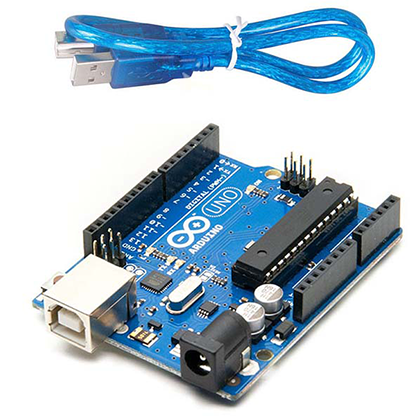
The Arduino UNO is the most widely used and documented development board in the Arduino ecosystem. Based on the ATmega328P microcontroller, it offers 14 digital I/O pins, 6 analog inputs, and USB connectivity for programming and serial communication. Ideal for beginners and professionals alike.
Specifications
Microcontroller: ATmega328P
Operating Voltage: 5?V
Input Voltage: 7–9?V
Digital I/O Pins: 14 (of which 6 support PWM)
Analog Input Pins: 6
DC Current per I/O Pin: 20?mA
Flash Memory: 32?KB (ATmega328P)
- 0.5?KB used by bootloader
SRAM: 2?KB
EEPROM: 1?KB
Clock Speed: 16?MHz (ceramic resonator)
USB Interface: Atmega16U2 (R3 version) or Atmega8U2 (R2 and earlier)
Communication: UART, SPI, I²C
Programming Interface: USB-B (via included cable)
Power Jack: Barrel connector (2.1?mm centre-positive)
ICSP Header: 6-pin for external programmer
Reset Button: Onboard
Features
Plug-and-play USB programming and serial monitoring
Compatible with Arduino IDE and vast open-source libraries
Breadboard-friendly layout with standard headers
Ideal for embedded control, sensor interfacing, and educational projects
Common use cases:
- STEM learning and classroom kits
- Robotics and automation controllers
- Sensor data acquisition and logging
- Serial-controlled relays, motors, and displays
In Stock
Customer Reviews
No reviews yet
Write a Review
Login to write a review.